Screen Smart: Simple Eye Care Habits That Actually Work
Between classes, homework, gaming, and scrolling, screens are everywhere in a normal day. That's not going away — but a few simple habits can keep your eyes feeling a lot less tired, and make it a lot easier to fall asleep at night.
This article shares general, educational information about eye comfort and screen habits. It isn't medical advice — if your eyes hurt often, or your vision seems blurry, that's worth mentioning to a parent, guardian, or doctor.
The biggest one: your phone in a dark room
Of everything in this article, this is the habit worth paying the most attention to: scrolling on your phone in a dark room — especially in bed, right before sleep — is rougher on your eyes and your sleep than using the exact same phone during the day.
Here's the part most people don't know: it's not really about the phone. It's about what your eyes are doing in the dark.
Your pupils open wider in the dark. That's normal and helpful most of the time — it lets more light in so you can see. But it means that when a bright phone screen suddenly lights up two inches from your face, a lot more of that light is hitting your eyes than it would in a lit room, where your pupils would already be smaller.
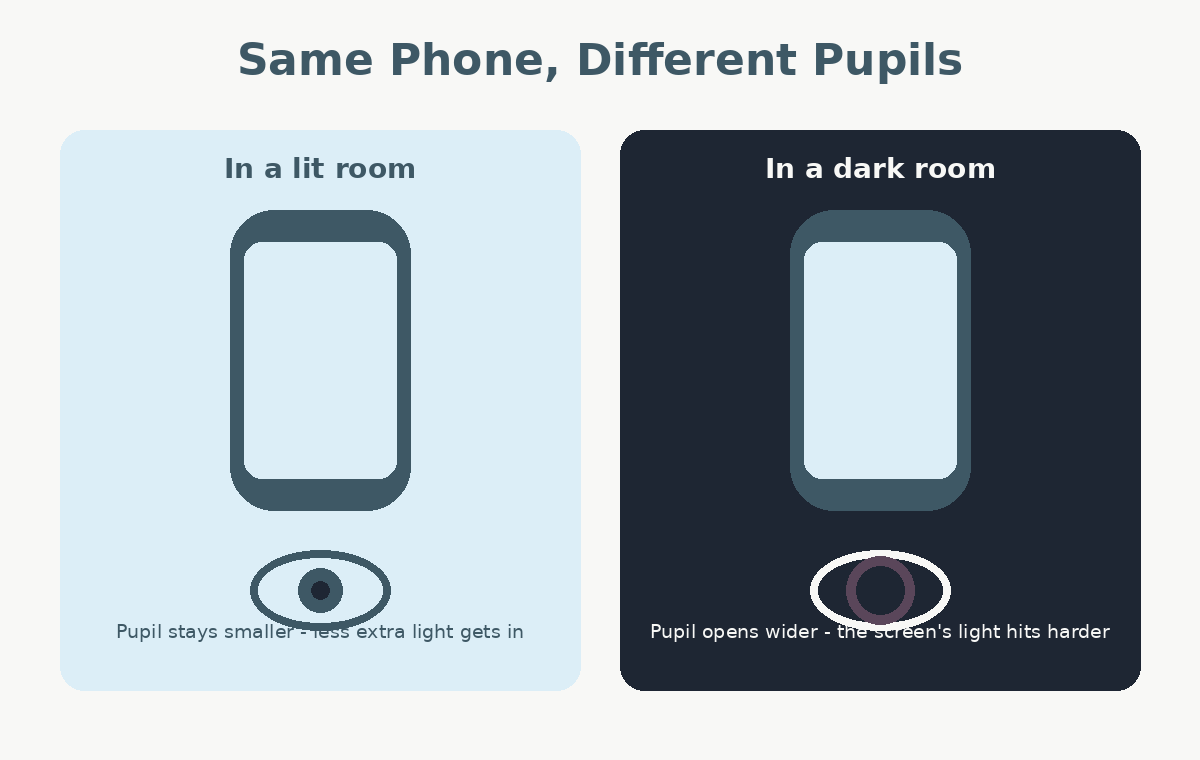
Same phone, same brightness — very different amount of light reaching your eyes.
That extra contrast between a bright screen and a dark room is part of why eyes feel more tired, dry, or strained after nighttime scrolling than after the same amount of daytime scrolling.
It's also a sleep problem, not just an eye problem
Phone screens give off a lot of blue light. Your brain uses light as one of its main signals for whether it's day or night — and blue light specifically is very good at telling your brain "it's still daytime," even at 11pm.
That matters because your brain makes a hormone called melatonin that helps you feel sleepy. Bright light — blue light especially — can delay when your brain starts making it. So scrolling right before bed doesn't just tire your eyes out; it can genuinely make it harder to fall asleep, even if you feel tired.
- Try switching your phone to "Night Shift" or "Night Mode" in the evening — it shifts the screen to warmer colors with less blue light.
- If you're using your phone in a dark room, turn on a small lamp instead of using only the phone's glow.
- Give yourself a real screen-free stretch before bed, even just 20-30 minutes — a book or just talking with family works great here.
The 20-20-20 rule
This is the single most useful daytime habit, and it's easy to remember:
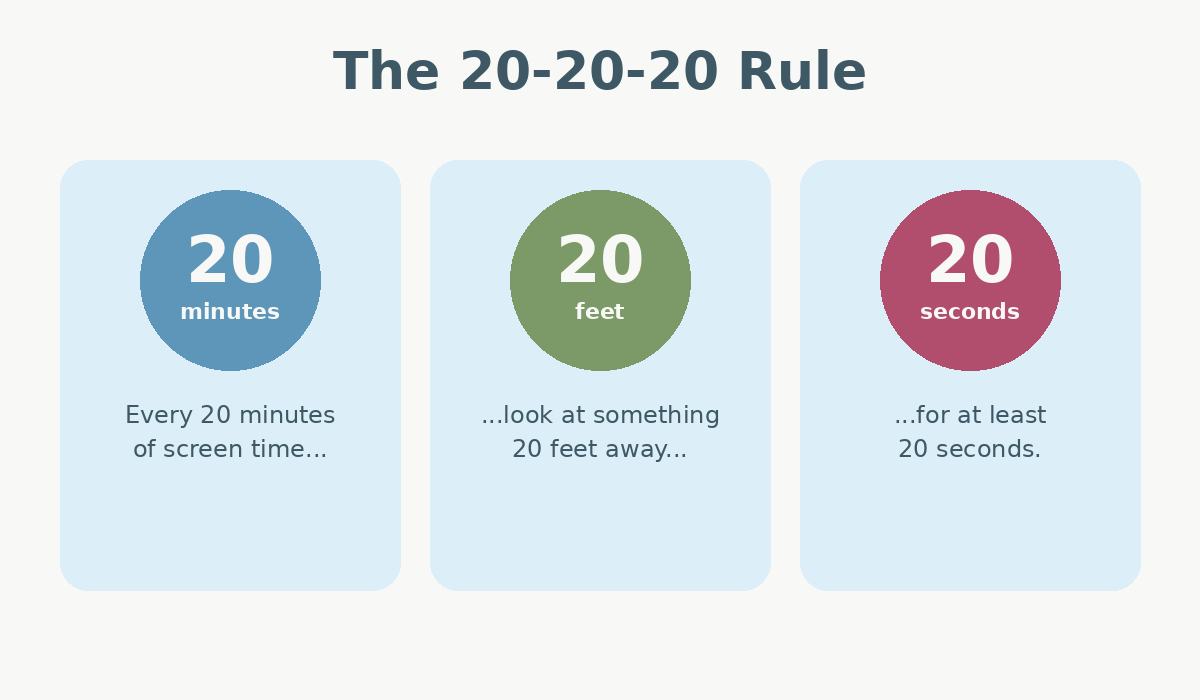
The 20-20-20 rule, in one picture.
Looking far away for those 20 seconds gives the tiny muscles inside your eye a chance to relax — they've been holding one, close-up focus the whole time you were looking at a screen.
Give your eyes some space
How far your phone sits from your face matters more than most people think.
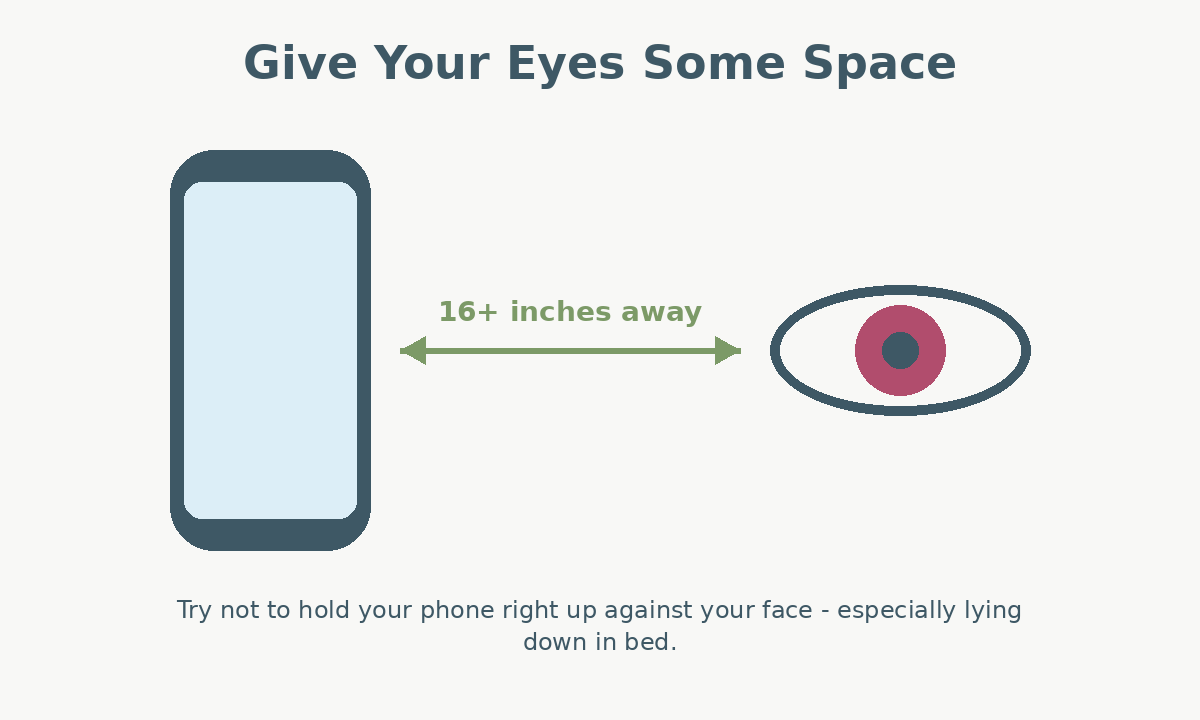
A good general target — not right up against your face.
- Keep your phone at least 16 inches away when you can, not pressed close to your face.
- Watch out for the "phone flat above your face in bed" habit — it's easy to fall into, and it's the closest most people ever hold a screen.
- Position screens at or slightly below eye level rather than looking sharply up or down for long periods.
A quick look at what's actually happening
It helps to know roughly what's going on inside your eye when you're looking at a screen:
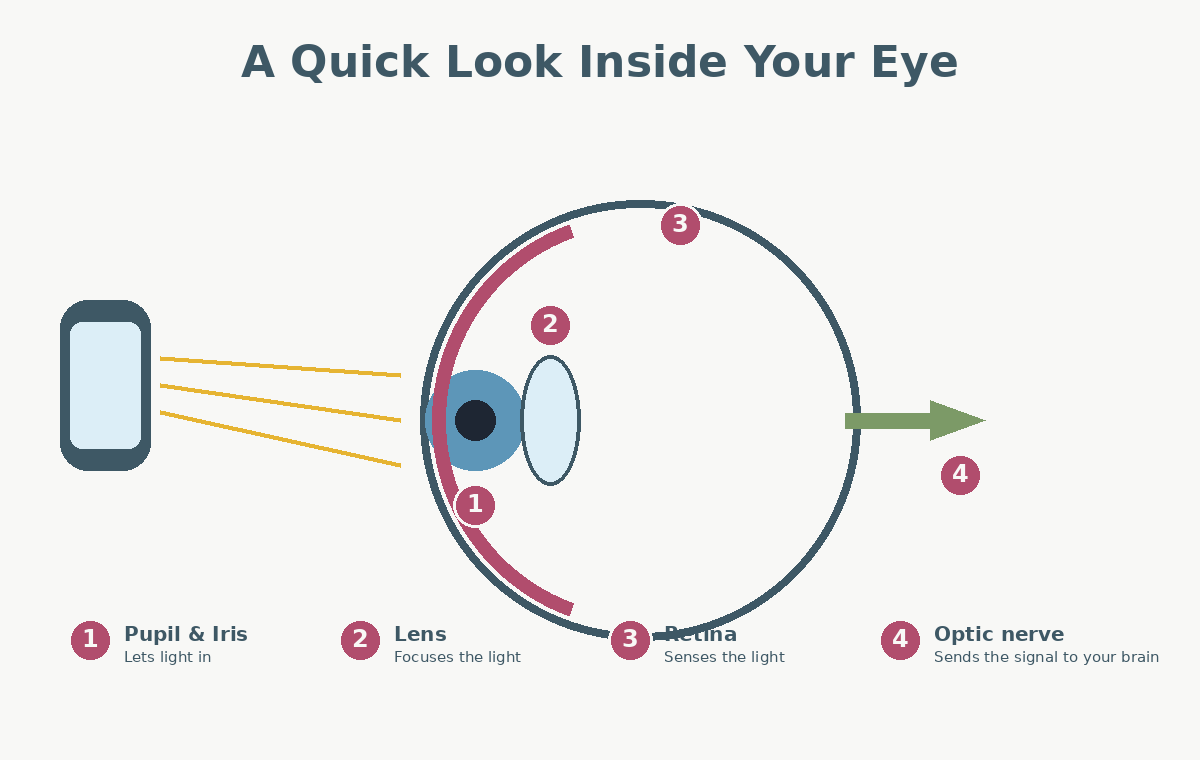
Light enters through the pupil, gets focused by the lens, and lands on the retina — which sends the signal to your brain.
Every part of that system is working the whole time you're looking at a screen. In a dark room, the wide-open pupil means more of that bright light is landing on your retina than it would during the day — which is exactly why the habits above make a real difference.
Lighting matters during the day too
Try this: match your screen brightness to the room. If the room is dim, turn the screen down too.
- Reduce glare by angling the screen away from windows or overhead lights.
- Turn on a lamp for evening homework instead of relying only on your screen's glow.
Breaks that actually help
Long, uninterrupted stretches of screen time are the real culprit — not screens themselves.
- Stand up and look out a window for a minute between homework subjects.
- Try reading a physical book for part of your evening instead of a screen.
- Keep phones out of bed if you can — charging it across the room makes this a lot easier.
The takeaway
You don't need to give up screens to take care of your eyes — you just need a few habits that fit naturally into a normal day. If you only take away one thing: watching your phone in the dark, especially right before bed, is the habit worth changing first.